
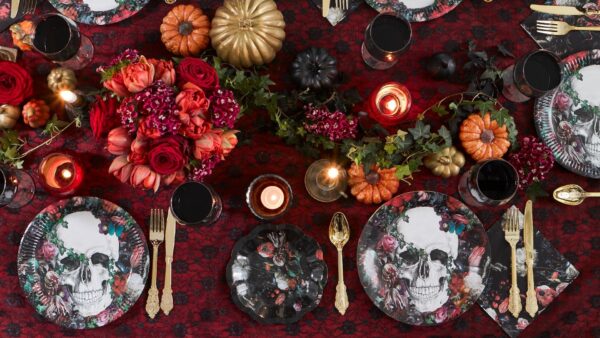
What’s the Difference Between Interior Decorating and Interior Styling?
People often use the words decorating and styling interchangeably. As an interior stylist, I hear it all the time.
“Don’t you just come in at the end and add the cushions?”
Not quite.
After more than 25 years working as an interior stylist on editorial and commercial shoots, I can tell you that decorating and styling are two very different professions. They overlap, of course, but they have different goals, different skills and different ways of looking at a space.
If you’ve ever wondered where one ends and the other begins, here’s how I explain it.
Decorating Creates the Space. Styling Creates How It Feels.
When I think about decorating, I think about the permanent decisions.
The wall colour. The wallpaper. The flooring. The kitchen. The fitted furniture. The window treatments. The fabrics. The pieces that will stay in the room for years.
Styling starts once those foundations are in place.
It’s the layer that gives a room personality. It’s what makes you stop scrolling, feel something or imagine yourself living there. It’s the textures, artwork, books, flowers, lighting, ceramics and accessories, but it’s also knowing exactly which ones to leave out.
For commercial photography, styling goes one step further.
We’re not styling for the homeowner. We’re styling for the camera. Every decision is made to communicate a brand, tell a story or make a product irresistible.
Styling Isn’t About Making a Room Pretty
One of the biggest misconceptions about interior styling is that we simply make rooms look beautiful.
That’s probably the part people notice.
What they don’t see is everything that happens before the first prop is unpacked.
A professional interior stylist spends hours researching, interpreting the brief, sourcing products, planning colour palettes, organising logistics and finding exactly the right location. We know where to source random items, often out of season. We solve problems when deliveries don’t arrive or go to the wrong place. We’ve always got alternatives when props aren’t right. We manage courieors, set builders, assistants, marketing managers, social media managers, photographers and clients while keeping the shoot moving along.
Most lead stylists don’t learn that overnight.
It usually takes years of assisting experienced stylists before you’re trusted to lead a shoot yourself. You learn how shoots REALLY work, how to think ahead, how to adapt when plans change and how to create beautiful images under pressure.
By the time I’m choosing the final prop accessories, the styling started days or even weeks earlier.
A Stylist Edits as Much as They Add
One of the biggest parts of my job is removing things.
That often surprises people.
Most of the homes we photograph belong to real people. We choose them because they have the right architecture, natural light or overall aesthetic, but very rarely do we shoot them exactly as they are.
We edit, remove personal belongings, replace artwork and swap out their accessories for those that are more “on brand”.
We temporarily transform someone’s home into the world the brand wants to create.
A Halloween Shoot That Was Used for Years
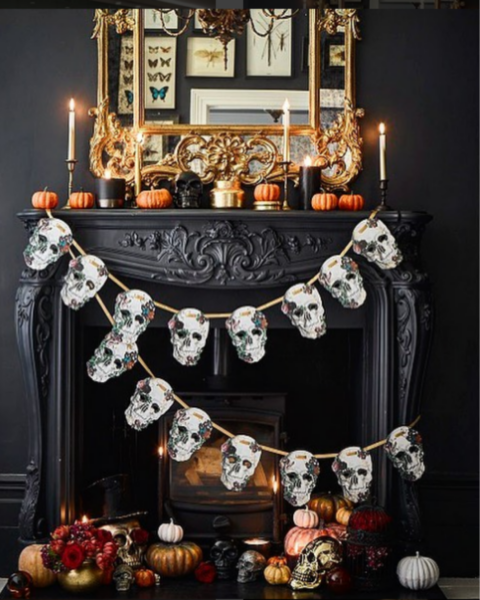
One shoot that always sticks in my mind was for a Halloween product range.
We found an amazing modern house with one dramatic room painted almost entirely black. It had black walls, black shelving and an enormous traditional black fireplace. It was the perfect backdrop.
The homeowners also had an incredible collection of taxidermy displayed under glass domes and framed insects covering the walls.
They were beautiful but too out there for the brand. It was too much of a risk of upsetting or worde alienating their customer base.
Every piece had to be carefully removed before we could start shooting. We couldn’t simply leave empty spaces because removing artwork often reveals marks or faded paint beneath. Every item we took down had to be replaced with something else.
We brought in our own oversized mirror, dressed the mantelpiece with the clients Halloween props and created an entirely new story for the brand.
The finished shots were so successful they were reused year after year while the products remained available.
The room wasn’t decorated.
It was styled for a purpose.
Sometimes the Best Locations Need the Most Work
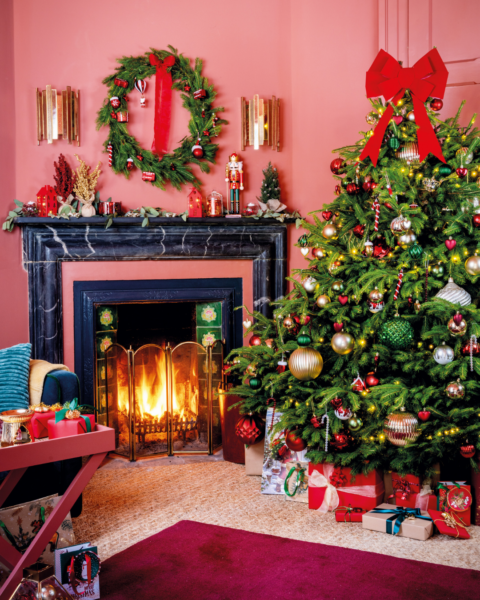
On another Christmas campaign, we travelled from London to Plymouth because we’d found an incredible 14-bedroom house that offered tons of different shooting spaces.
It was spectacular with high ceilings, ornate skirting boards – that nearly reached my knees and beautiful architectural details. It also contained priceless artwork and antiques. The pink drawing room with exactly the right wall colour was the main draw for us.
One wall displayed an original portrait photograph of Queen Elizabeth II by Chris Levine – a renowned photographer. Stunning, but completely wrong for the brand we were photographing. We were pre-warned not to touch it and get the owners to move it for us. We did that. We were scared to break it!
They carefully removed it for us, and we replaced it with a Christmas wreath made from scratch (by me) covered in Christmas decorations thet were selling that year. We cleared their accessories, restyled the mantelpiece and created an entirely different feeling while respecting the house and everything inside it.
That’s what styling often looks like. You’re not changing the deisgn. You’re changing the story.
Styling Is About Guiding the Eye
One thing I teach all my students is that styling isn’t about filling a room.
It’s about directing someone’s attention.
Where does your eye land first?
Where does it look next?
What catches your attention?
What makes you pause?
Everything we add should help answer those questions.
Scale matters.
Contrast matters.
Negative space matters.
Sometimes adding one striking object has far more impact than adding ten.
Why Stylists Don’t Like Matching Everything
One of the most common mistakes I see is when everything matches.
Matching cushions.
Matching accessories.
Matching everything.
For me, that’s where a room starts to lose it’s personality.
I like rooms that have something unexpected. Something that grounds the scheme.
I often tell students it’s worth introducing a touch of black somewhere in a room. It might be a picture frame, a candlestick, a trim on a cushion or a small decorative object. It gives your eye somewhere to settle and grounds the room
Equally, I spend a lot of time teaching students about grouping objects.
Odd numbers generally feel more natural than even numbers because they encourage your eye to keep exploring rather than simply acknowledging what it’s looking at and moving on.
These aren’t rigid rules. Good stylists know when to break them. But understanding why they work is part of developing your own eye.
Every Stylist Develops Their Own Style
One thing I always tell my students is that they shouldn’t try to become me or their favorite inteiror stylist.
If I love something and they don’t, neither of us is wrong. The goal isn’t to copy another stylist. It’s to develop your own eye. Your own taste. Your own confidence.
Because once you truly understand why something works, you’ll be able to create spaces that feel authentic rather than copied and fake.
What Interior Stylists Notice First
There are a few things almost every interior stylist notices immediately.
A wonky picture frame.
A crooked mirror.
And yes… that famous karate chop cushion.
Interior designers love them. Interior stylists don’t. It’s one of those funny industry quirks. Beyond that, we instinctively look at a room and think about what we’d change. Not because we’re judging. Because that’s simply how our brains work. We notice when negative space feels uncomfortable, or when everything is the same height. We notice where the light comes from and most of all, we see rooms in shots.
We’re constantly framing little scenes in our minds, almost as though we’re looking through a camera.
So What’s the Difference Between Decorating and Styling?
Decorating creates the backdrop.
Styling brings it to life.
A decorator helps you choose the permanent elements you’ll live with every day.
A stylist takes those foundations and creates personality, atmosphere and emotion.
For commercial work, a stylist also creates how a brand is perceived. We make sure the product becomes the hero, the story feels authentic, and every image communicates exactly what it needs to.
So no, we don’t just add cushions.
We create images that make people stop, look a little longer and, hopefully, fall in love with what they’re seeing.